Author: bpmukadmin

  • Red Cross & Red Crescent Movement Patches UK Ordering Guide

    Red Cross & Red Crescent Movement Patches UK Ordering Guide

    If you’re ordering patches for the Red Cross and Red Crescent Movement, you’re not ordering “merch”.

    You’re ordering an emblem that can protect lives, signal neutrality, and instantly tell people, “Medical help is here.” That’s a different job than a normal logo patch. It comes with rules, approvals, and a level of accuracy that leaves zero room for “close enough”.

    This guide covers what Red Cross and Red Crescent Movement Patches are used for, who can legally use them, and how to spec patches that stay readable in real conditions, from field response to clinical uniforms.

    What Makes Red Cross And Red Crescent Movement Patches Different

    The emblem is protected by law, not treated like a brand mark

    The red cross, red crescent, and red crystal are protective emblems recognised under the Geneva Conventions. They are not decorative symbols and they are not a religious symbol. 

    In the UK, misuse is a legal issue, not a “branding preference”. Under the Geneva Conventions Act 1957 (as amended), using the emblem without proper authority is unlawful, and civilian use outside the British Red Cross is described as misuse. 

    That’s why a professional supplier will ask the right questions before producing these patches.

    Protective use vs indicative use

    There are two broad uses recognised in international humanitarian law:

    • Protective use: Used in armed conflict to protect medical personnel, units, transports, and facilities. It needs to be large and clearly visible. 
    • Indicative use: Used to show a link to the Movement, usually smaller and typically paired with extra identifiers such as a National Society name. 

    This matters because “small embroidered chest patch for a volunteer jacket” is a different spec from “high-visibility protective marking”.

    Who Can Order Red Cross And Red Crescent Movement Patches

    Authorisation is not optional

    As a rule, the emblems are reserved for authorised users connected to the Movement and for certain medical services, with controls enforced through national law. 

    If you are a third-party organisation, a business, a first-aid company, or an event organiser, you generally cannot just place an order because you like the symbol. If you need emblem patches for an official programme, you should be prepared to provide written authorisation and the correct usage context.

    Practical supplier rule that saves everyone time:

    • No written authority, no production of protected emblems.

    That protects the Movement, the public, and you.

    What this means for UK procurement teams

    If you’re sourcing for official use, build this into your internal checklist:

    • Confirm which emblem is approved for your organisation and context.
    • Confirm whether the patch is for protective or indicative use. 
    • Keep approval evidence on file for audits and reorders.

    Patch Specs That Work In Field And Clinical Reality

    A patch that looks good on a screen can still fail in the real world. Uniforms get washed hot, dried hard, and dragged through work that isn’t gentle.

    If your patches need to meet healthcare-grade expectations for wash cycles and infection-control considerations, this related guide is worth bookmarking: Healthcare-Ready Uniform Patches for NHS & Clinics.

    Choose the right patch style for the job

    Here’s a simple way to match patch styles to real use:

    • Custom Embroidered Patches: Traditional look, strong visibility, great on outerwear and uniform jackets. Best when the design is bold and uncomplicated.
    • Custom Woven Patches: Cleaner small text and finer detail. Useful for role identifiers and unit names that must stay legible.
    • Custom PVC Patches: Durable, wipe-clean, solid for rugged kit bags and outdoor response gear.
    • Custom Printed Patches or Custom Sublimated Patches: Useful when you need crisp edges and consistent colour without stitch texture, especially for complex layouts.

    For many uniform programmes, an embroidered or woven build hits the sweet spot for durability and clarity, especially when you need bulk custom patches for uniforms across multiple roles.

    Backing choices that do not fall apart mid-season

    Backings are where many uniform patch programmes quietly fail.

    • Sew on patches for clothes: Best for repeated laundering and long-term wear.
    • Velcro backing: Best when roles rotate, such as “Volunteer”, “First Aider”, “Team Lead”, or when patches move between garments.
    • Custom iron on patches: Convenient for light-duty garments, but you must confirm heat tolerance and wash conditions. For heavy-duty uniforms, sew-on usually wins.

    If you’re running multi-role kits, pairing Velcro role patches with sew-on identity patches keeps things clean and manageable.

    Size and placement: visibility beats aesthetics

    For emblem patches, readability is the goal.

    Common placements that work:

    • Chest for identification at close range
    • Upper sleeve for visibility side-on
    • Back patch for event control and crowd visibility
    • Bag and outerwear patches for team recognition off-duty

    Avoid tiny patches with tiny text. If the detail matters, choose woven or printed, increase size, or simplify the text.

    Building a Patch System for Teams without Creating Chaos

    Most organisations need a set.

    A simple, scalable patch system often includes:

    • Emblem patch used according to authorised rules
    • Role patch for operational clarity
    • Name patch for frontline teams, similar to custom employee name patches for workwear
    • Department or unit patch where needed

    Keep the system consistent:

    • Same shape and size where possible
    • Same backing rules across the programme
    • Same placement rules for all staff

    That consistency helps new volunteers onboard faster and reduces reorder mistakes.

    Quantity planning that protects your budget

    The fastest way to overspend is ordering equal quantities of everything.

    A smarter split:

    • Higher volume for core identity patches
    • Medium volume for role patches that repeat across teams
    • Smaller runs for time-limited deployments or events

    If a deadline is tight, fast turnaround custom patches UK is only possible when artwork, approvals, and specs are already locked. Rushed timelines plus unclear approvals is how mistakes happen.

    Misuse Risks And Safer Alternatives For Non-Authorised Groups

    Let’s be blunt because it saves trouble later.

    If you are not an authorised user, do not use a red cross or red crescent emblem on patches, uniforms, products, websites, packaging, or signage. UK law restricts use without authority and also covers imitations that could be mistaken for the emblem. 

    If you run a first-aid business, training provider, event medical team, or community group, you can still get great patches. You just need a design that does the job without stepping into protected territory, for example:

    • Text-first patches like “First Aid”, “Medical Team”, “Event Medic”
    • A different colour cross that cannot be confused with the protected emblems
    • A shield, circle, or star icon system paired with clear wording

    A good custom patch maker will guide you away from risky designs and towards something that still looks professional.

    Working With a Renowned UK Patch Maker

    When you’re sourcing a sensitive emblem patch programme, the supplier relationship matters. You want:

    • Clear proofing and approval steps
    • Consistent colour and edge finishing
    • Reliable reorders with saved specs
    • A process that respects authorisation requirements

    If you want a view of what quality control and supplier consistency should look like in the UK patch market, this overview is a useful reference point: Your Trusted Go-to Source for Quality Custom Patches in the UK. 

    Practical questions to ask before placing an order:

    • What proof format will we receive and what exactly can be adjusted?
    • How will you keep consistency across repeat batches?
    • What backing and edge finish is best for our uniform wash conditions?
    • Can you support multi-role patch sets and staged deliveries?
    • What’s the fastest realistic timeline once approvals are confirmed?

    Frequently Asked Questions

    Can any business order Custom Patches for Red Cross or Red Crescent Movement?

    Usually no. The emblems are protected under international and UK law and are reserved for authorised users. You should be ready to provide written authorisation for emblem production. 

    What is the difference between protective and indicative use?

    Protective use is for armed conflict protection and is typically large and highly visible. Indicative use shows a link to the Movement and is usually smaller and paired with additional identifiers. 

    What patch type is best for uniform use?

    Embroidered and woven are common for uniforms, with sewn backing for durability. PVC can work well for rugged gear and wipe-clean needs.

    Should we choose sew-on or Velcro backing?

    Sew-on is best for high-wash durability. Velcro is best when roles rotate or patches need to move between garments.

    What if we need patches for an event medical team but are not authorised?

    Use an alternative design such as text-first “Medical Team” patches or a non-confusable symbol. Avoid any red cross or red crescent emblem or close lookalikes.

    Get Your Patches Designed!

    Red Cross and Red Crescent Movement Patches are not ordinary custom patches. They carry legal protections, operational purpose, and a responsibility to get the details right.

    If you’re ordering for authorised use, treat it like a uniform programme, not a quick online purchase. Get approvals confirmed, lock your specs, choose durable materials, and standardise placement so teams stay identifiable in real conditions.

    Patch Makers UK can support compliant, high-clarity patch production for authorised organisations, with proofing that stays accurate and specs that remain consistent across reorders. If you’re ready, the next step is simple: share your authorised usage context, patch placement, quantities, and timeline so production can be planned properly.
  • Religious and Spiritual Patches For Events and Communities

    Religious and Spiritual Patches For Events and Communities

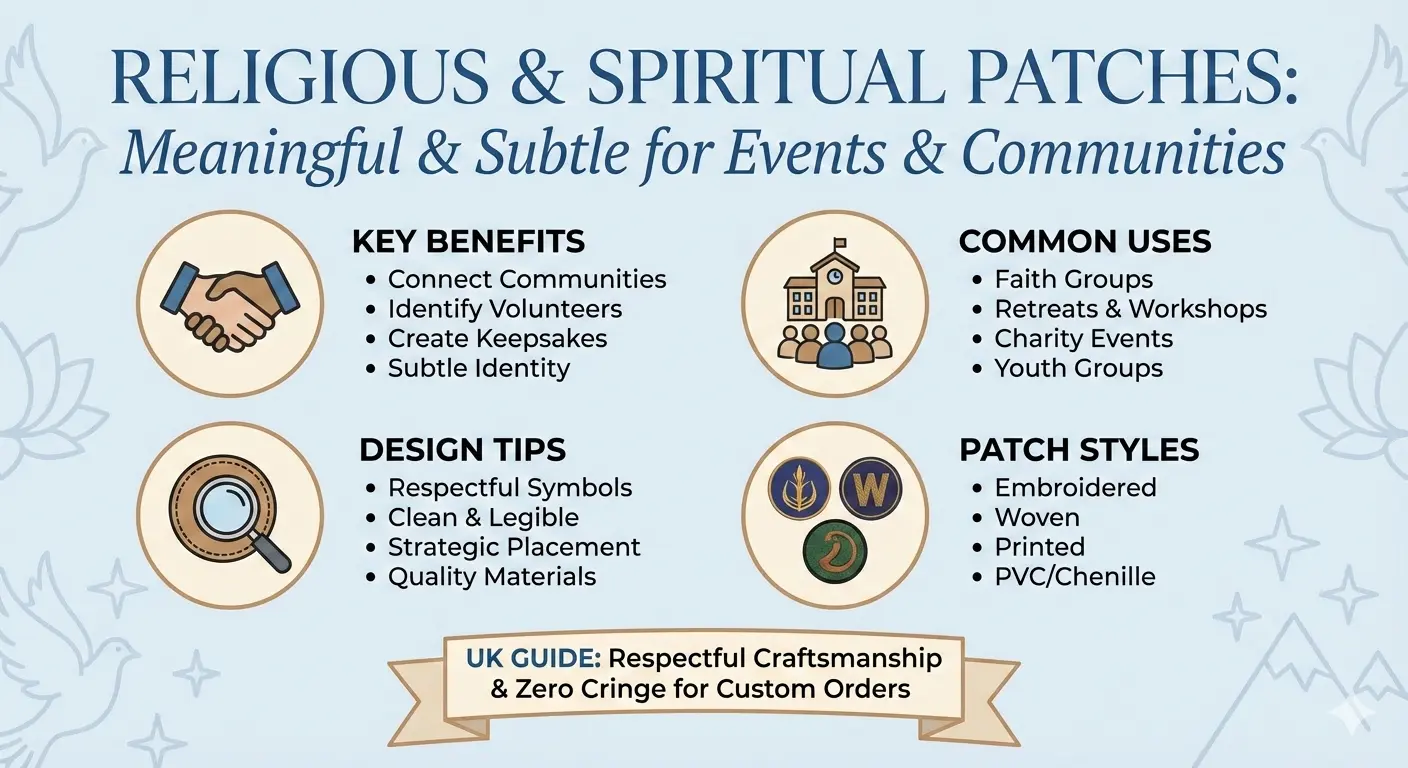
    Some patches are pure style. Others are pure signals. Religious and spiritual patches sit in a different lane. They are personal, sometimes sacred, often symbolic, and they get worn close to the heart. For faith groups, charities, retreat organisers, community leaders, and even clothing brands, patches can carry meaning without shouting.

    This guide covers how to design, order, and use religious and spiritual patches in the UK with respect, clean craftsmanship, and zero cringe.

    Why Religious And Spiritual Patches Are Growing In The UK

    People want subtle identity, not loud labels

    In 2026, many people prefer meaning you can notice, not meaning that yells at strangers. A small patch on a hoodie sleeve, tote bag, or cap works because it is readable to those who know, and simply a nice design to everyone else.

    That is why patches show up on:

    • Youth group hoodies and church merch
    • Mosque, temple, and gurdwara volunteer gear
    • Retreat staff shirts and tote bags
    • Charity walk jackets
    • Everyday items like backpacks and caps

    Communities are using patches as “belonging badges”

    A patch can mark membership and service without being over-the-top. Think of it like a modern club member’s patch, but faith-centred.

    For organisers, it is practical too. Patches help identify volunteers, stewards, and staff at gatherings, especially when you want a clean look without printing new uniforms every time.

    They work for events and fundraising without feeling salesy

    A well-designed patch is affordable, collectable, and easy to sell. It is also easier to wear than a big logo tee. That makes religious and spiritual patches a smart choice for:

    • Community events
    • Pilgrimage groups
    • Retreats
    • Youth camps
    • Charity fundraisers

    If you run custom patches for events, patches become a keepsake people actually keep.

    Common Use Cases For Religious And Spiritual Patches

    Faith organisations and community groups

    Examples include:

    • Volunteer patches for stewards and helpers
    • Youth group patches for hoodies and bags
    • Choir, outreach, and charity team identifiers
    • Anniversary and celebration badges

    These are often ordered as custom patches for UK communities where consistency matters across multiple runs.

    Retreats, workshops, and spiritual programmes

    Retreats often want a calm, tasteful look. Patches work because they can be minimal and elegant, placed on:

    • Tote bags
    • Hoodies
    • Caps
    • Lanyard pouches

    This is also where “symbols only” designs work well, rather than full text.

    Apparel brands inspired by faith and spirituality

    Some fashion brands use spiritual motifs as a design language. The key is doing it respectfully and avoiding symbols that are sacred in ways your audience may not expect.

    A good approach is using:

    • Abstract motifs
    • Calligraphy elements with proper context
    • Clean iconography with approval from the community you are representing

    Patch Styles That Suit Religious And Spiritual Designs

    Embroidered patches for classic, premium feel

    For most religious and spiritual patches, Custom Embroidered Patches are the best all-rounder. They feel traditional, durable, and “proper” on garments.

    They work brilliantly for:

    • Small chest patches
    • Sleeve patches
    • custom embroidered patches for hoodies
    • Volunteer jackets and outerwear

    If your group values craftsmanship, high quality embroidered patches made in UK supports that standard.

    Woven patches for fine text and intricate symbols

    If your design includes delicate linework or small text, Custom Woven Patches can keep it crisp. This is useful for:

    • Short quotes or mottos
    • Detailed crests
    • Multi-language text where clarity matters

    Printed and sublimated patches for colour and gradients

    If your artwork includes colour blends, watercolour textures, or complex imagery, Custom Printed Patches or Custom Sublimated Patches can match the original look better than embroidery.

    Chenille and applique for bold youth merch

    For youth groups and modern streetwear-style merch, Custom Chenille Patches and Custom Applique Patches can look fresh and contemporary, especially on varsity-style jackets.

    PVC patches for outdoor groups and durable gear

    For hiking groups, outdoor camps, and rugged use, Custom PVC Patches hold up well and keep designs sharp.

    Shape And Placement Decisions That Make A Patch Feel Intentional

    Choose shapes that fit the symbol

    Religious and spiritual patches often look best when the shape supports the meaning:

    • Circles for unity and community
    • Shields for protection and service
    • Banners for mottos
    • Custom silhouettes for iconic symbols

    If you want something beyond standard shapes, this is worth a look: Unique Custom Shaped Patches for Any Purpose in the UK. 

    Placement matters more than most people think

    Where the patch sits changes how it feels:

    • Chest: formal and identifiable
    • Sleeve: modern, subtle, easy to wear
    • Back: bold, event or team heavy
    • Bag: casual, everyday visibility

    If your goal is “wearable, not preachy”, sleeve and bag placements usually win.

    Backing Options For Real World Use

    Iron-on patches for quick distribution

    If you are handing patches out to volunteers or selling them at events, custom iron on patches are convenient. People can apply them at home without sewing.

    Sew-on patches for long-term wear

    If patches will be worn weekly on uniforms, sew on patches for clothes is the better option. This is common for:

    • Volunteer vests
    • Stewards jackets
    • Regular community programmes

    Velcro for staff and rotating roles

    If your team roles change per event, Velcro patches make sense. Swap “Volunteer”, “Steward”, “First Aid”, or “Team Lead” without ordering new gear.

    Design Rules For Religious And Spiritual Patches That Do Not Backfire

    Get community approval for sacred symbols and text

    If you are using a sacred phrase, script, or symbol, get it checked by someone who understands it. This is not about being overly cautious. It is about respect and avoiding mistakes that turn into awkward explanations.

    Keep text short and legible

    Tiny text is the fastest way to ruin a patch. If you must include a quote:

    • Use 4 to 8 words
    • Increase patch size
    • Consider woven instead of embroidered

    Avoid mixing too many symbols in one design

    A patch is small. If you cram in multiple icons, it becomes visual noise. Pick one main element and build around it.

    Use colours intentionally

    In many traditions, colours have meaning. If colour is symbolic, note it in your order brief so the proof reflects it accurately.

    For ideas on styling patches with real outfits, this guide can help: Get Custom Design Patches to Match Any Outfit or Style. 

    Ordering Tips For Organisations And Brands

    Send the right files and size specs

    A good custom patch maker can move faster when you send:

    • A vector file where possible
    • Final size in mm
    • Backing preference
    • Quantity and deadline
    • Placement, hoodie sleeve, jacket chest, bag front

    If you want fast turnaround custom patches UK, clean inputs reduce proof revisions.

    Start with a small pilot run for new designs

    If you are creating a new patch for a youth group or a fundraising campaign, test first. Some suppliers offer cheap custom patches with no minimum or Custom patches no minimum for early runs.

    Once you see demand, scale into bulk for better unit pricing.

    Plan for reorders

    Faith groups often run recurring events. Keep your master files and specs saved so you can reorder quickly when needed, especially close to dates.

    Cost Questions People Actually Ask

    How much do custom patches cost

    Pricing depends on patch type, size, stitch coverage, backing, and quantity. The easiest way to control cost is:

    • Stick to one size across a collection
    • Keep colours consistent
    • Avoid ultra-fine detail unless you are using woven or printed
    • Order in sensible bulk for regular programmes

    If you are comparing suppliers, look beyond the quote. Proof quality, communication, and consistency matter more than saving pennies.

    Frequently Asked Questions

    What is the best patch type for religious and spiritual designs?

    Custom embroidered patches are the most popular for a classic premium look. Woven patches are better when you need fine text or detailed symbols.

    Should I choose iron-on or sew-on backing?

    Iron-on is best for quick distribution and easy application. Sew-on is better for uniforms and long-term wear, especially on heavier garments.

    Can I order patches for a one-time event?

    Yes. Many organisations order custom patches for events like retreats and charity days. Start with a smaller run if you are testing demand.

    How do I make sure the design is respectful?

    Use symbols and text with proper context, get community approval for sacred elements, and avoid mixing too many motifs into one patch.

    What items do these patches work best on?

    Religious and spiritual patches work well on hoodies, jackets, hats, and bags. Sleeve and bag placements are often the most subtle and wearable.

    Wrapping Up!

    Religious and spiritual patches work because they carry meaning in a wearable, respectful format. They help communities feel connected, help organisers run events more smoothly, and give brands a way to create symbolism people actually want to wear.

    If you are planning a volunteer programme, a youth group drop, a retreat patch, or a charity event run, working with a UK top patch maker like Patch Makers UK can help you choose the right patch style, backing, size, and finish, so your design looks clean and your message lands the way you intended.

  • Why Small Text Fails on Embroidery and Better Patch Options

    Why Small Text Fails on Embroidery and Better Patch Options

    There’s nothing more heartbreaking than approving a patch design that looks razor-sharp on screen… only to receive the finished embroidery and realise your small text has turned into a fuzzy suggestion of letters. Not a typo. Not a machine fault. Just the brutal reality of embroidery physics.

    If you’ve ever squinted at a badge thinking, “That was meant to say something, right?” , you’re not alone.

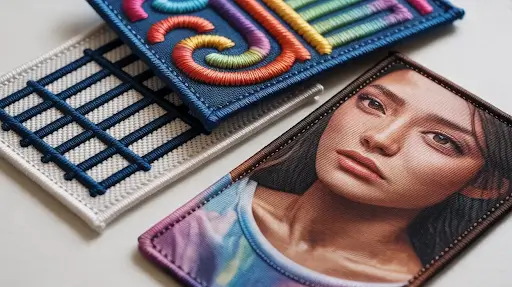
    Small text is the silent killer of embroidered patches. But here’s the good news: woven or sublimated patches exist specifically to fix this problem, and when used properly, they’re absolute game-changers for branding, uniforms, events, and fashion.

    Let’s break down why embroidery struggles with fine detail, when it still works, and exactly how woven or sublimated patches save the day, without wrecking your budget or your brand image.

    The Hard Truth About Embroidery and Small Text

    Embroidery is brilliant. Timeless. Premium. Rugged. But it’s not magic.

    Embroidery works by stitching thick threads into fabric using needles that physically move up and down. That mechanical reality creates limitations, especially when text gets small.

    Why Embroidery Struggles with Tiny Lettering

    Here’s what actually goes wrong:

    • Thread thickness: Embroidery threads are thicker than pixels or ink
    • Needle penetration: The needle needs physical space to punch through fabric
    • Pull and tension: Tight stitching causes letters to close up
    • Fabric distortion: Small shapes lose definition as fabric shifts

    Once text drops below around 5–6mm in height, embroidery starts to blur letters together. Serifs disappear. Spaces close. Counters fill in. Suddenly “EST. 1998” looks like modern art.

    This isn’t about poor digitising or a bad patch maker, it’s simply the wrong technique for the job.

    When Embroidery Still Works (And When It Doesn’t)

    Embroidery still has its place.

    Embroidery Works Best For

    • Bold lettering
    • Block fonts
    • Large logos
    • Simple shapes
    • Classic crests and badges
    • Custom military patches UK style
    • Custom biker patches for jackets

    Embroidery struggles with

    • Fine text
    • Thin fonts
    • Small taglines
    • Legal lines
    • Website URLs
    • Dense information
    • Small custom logo patches for hats

    If your design relies on clarity at a glance, especially at small sizes, embroidery may not be your best mate.

    That’s where woven or sublimated patches step in.

    Why Woven Patches Fix Small Text Problems

    Woven patches use thin threads woven together on a loom, rather than stitched into fabric. Think of it like high-resolution fabric printing using thread.

    What Makes Woven Patches Different

    • Much finer threads
    • No needle penetration into a base fabric
    • Tighter weave density
    • Sharper edges
    • Clear letter separation

    The result? Text that actually looks like text.

    This is why woven patches are widely used for:

    • Name patches
    • Rank badges
    • Event patches
    • Club member patches
    • Corporate logo patches UK made
    • Custom employee name patches for workwear

    If your design includes small letters, woven patches are often the best custom patches to order without redesigning everything.

    For a deeper comparison between styles, this guide breaks it down nicely: Pick the Best: Embroidered vs Sublimation vs Woven Patch. 

    When Sublimated Patches Are the Ultimate Fix

    If woven patches are sharp, sublimated patches are surgical.

    Sublimation uses heat to permanently bond dye into the patch surface. No threads. No stitches. No distortion.

    Why Sublimated Patches Handle Tiny Text Perfectly

    • Text is printed, not stitched
    • Zero thread thickness
    • Unlimited colour detail
    • Crisp edges at any size
    • Photographic clarity

    This makes sublimated patches ideal for:

    • Micro text
    • Fine outlines
    • QR codes
    • Colour gradients
    • Multi-language designs
    • Promotional patches for brand marketing
    • Custom patches for events and festivals

    If your patch includes information that must be readable, sublimation is often the safest choice.

    Woven vs Sublimated Patches for Small Text

    Let’s make this practical.

    Choose Woven Patches When:

    Choose Sublimated Patches When:

    • Text is very small
    • Colour accuracy matters
    • You want photo-level detail
    • The design is complex
    • You need fast turnaround custom patches UK

    Both options massively outperform embroidery for fine detail.

    Common Design Mistakes That Kill Small Text

    Even with woven or sublimated patches, bad design choices can still trip you up.

    Avoid these classic errors:

    • Ultra-thin fonts
    • Script fonts at small sizes
    • Low contrast colour combos
    • Cramming too much text into one patch
    • Ignoring viewing distance
    • Designing for screen, not fabric

    A solid custom patch maker will flag these issues before production, which is why working with the best patch maker in the UK actually saves money long-term.

    How to Fix Small Text Without Redesigning Everything

    Good news, you don’t always need a full redesign.

    Here are smart fixes that work:

    • Switch embroidery to woven patches
    • Convert micro text to sublimation
    • Increase text size slightly
    • Boost contrast
    • Separate text into a secondary patch
    • Use backing options that stabilise detail

    If you’re unsure how a patch will sit on clothing, this article is a solid reference: Get Custom Design Patches to Match Any Outfit or Style. 

    Best Backing Options for Fine Detail Patches

    The backing matters more than most people realise.

    For small text clarity:

    • Heat seal backing keeps edges flat
    • Sew-on backing offers flexibility
    • Velcro backing works well for uniforms and tactical use

    Avoid cheap adhesives that can warp the patch over time, especially for sublimated patches.

    Cost Comparison for Small Text Patches

    Let’s talk numbers, because everyone asks.

    Typical Pricing Factors

    • Patch type
    • Size
    • Quantity
    • Backing choice
    • Turnaround speed

    Generally speaking:

    • Woven patches cost slightly more than embroidery
    • Sublimated patches are often cheaper for complex designs
    • Bulk orders reduce cost per unit dramatically
    • Cheap custom patches with no minimum are possible with the right setup

    If you’re asking how much do custom patches cost, the answer depends on choosing the right technique first, not fixing mistakes later.

    FAQs

    Why does small text look bad on embroidered patches?

    Embroidery uses thick thread and needle penetration, which causes small letters to merge and lose definition.

    What is the minimum readable text size for embroidery?

    Around 5–6mm tall. Anything smaller risks clarity issues.

    Are woven patches better than embroidered patches?

    For small text and fine detail, yes. Woven patches offer higher resolution and sharper lettering.

    Do sublimated patches last as long as embroidered ones?

    Yes, when produced correctly. Sublimated patches are colourfast and durable for regular wear.

    Which patch type is best for logos with small writing?

    Woven or sublimated patches are usually the best choice.

    Can I mix patch types in one order?

    Absolutely. Many brands use embroidery for bold logos and woven or sublimated patches for detail work.

    Why This Choice Matters!

    Your patch is often the first thing people notice. It represents your brand, your club, your event, or your identity. Letting small text fail because of the wrong production method is an avoidable mistake and an expensive one.

    If clarity matters, embroidery isn’t always the hero. Woven or sublimated patches exist for a reason, and using them properly separates professional branding from amateur disappointment.

    If you’re planning to buy custom patches online, ordering bulk patches, or launching a branded range, get the technique right from day one. The difference isn’t subtle, it’s night and day. Small text doesn’t have to fail. You just need the right patch from Patch Makers UK to back it up.

  • Heat Transfer vs Embroidery, What Works Best for Fabric!

    Heat Transfer vs Embroidery, What Works Best for Fabric!

    Your logo is ready. Your garments are stacked. The only thing standing between a forgettable finish and a proper brand flex is this one decision: heat transfer vs embroidery.

    This debate pops up everywhere in the UK patch world. Workwear buyers arguing over durability. Fashion brands chasing detail. Event organisers needing speed. And small businesses asking the big question, sewn or heat‑pressed?

    What’s surprising, there’s no universal winner. But there is a smart choice for your fabric, budget, and branding goal. Let’s break it down without the waffle, the jargon overload, or the salesy nonsense.

    What Makes Heat Transfer Vs Embroidery A Popular Debate?

    Both methods dominate the custom patch and apparel game for a reason.

    Embroidery brings texture, heritage, and that premium stitched feel Brits trust on uniforms, hats, and jackets. Heat transfer delivers sharp graphics, colour accuracy, and speed, ideal for modern designs and fast campaigns.

    The confusion starts when people assume one replaces the other. It doesn’t. Each solves a different branding problem.

    If you’re choosing between embroidery vs heat transfer, you’re really choosing between longevity, detail, fabric behaviour, and cost efficiency.

    Heat Transfer Explained Without the Hype

    Heat transfer, also known as heat press branding, uses high heat and pressure to apply a design onto fabric. The artwork is printed or cut onto heat transfer vinyl or paper, then heat‑pressed onto garments.

    Common heat transfer methods include

    • Heat transfer vinyl
    • Printed heat transfer paper
    • Sublimation on compatible fabrics
    • Embroidered heat transfers

    These designs sit on the fabric rather than through it. That’s why heat‑pressed onto garments often look flatter, smoother, and more graphic. Heat press applications shine when detail matters more than texture.

    Embroidery Explained Like an OG

    Embroidery stitches your design directly into the fabric using specialised embroidery machines. Thread replaces ink. Texture replaces flatness.

    Direct embroidery is known for

    • Raised, tactile finish
    • Strong durability
    • Premium appearance
    • Excellent wash resistance

    This is why custom embroidered patches dominate uniforms, biker jackets, scout patches, and corporate workwear across the UK.

    If you’ve ever wondered how logos become stitch‑ready, the process starts with digitisation. That’s where design files are converted into stitch paths, a crucial step explained in this guide on how to turn a picture into an embroidered patch. 

    Fabric Durability: Which One Actually Lasts?

    This is where heat transfer vs embroidery comparisons get spicy.

    Embroidery durability

    • Thread is stitched into fabric
    • Resistant to repeated washing
    • Handles friction better
    • Ideal for heavy‑duty garments

    Heat transfer durability

    • Sits on fabric surface
    • Can crack or peel over time
    • Sensitive to wash temperature
    • Depends heavily on material quality

    On cotton, denim, canvas, and fleece, embroidery wins. On lightweight synthetics, stretch fabrics, and performance wear, heat transfer often behaves better.

    If durability is your top priority, embroidery takes the crown. No debate.

    Which Branding Method Works Best For Different Fabrics?

    Let’s keep this practical.

    Best fabrics for embroidery

    • Cotton
    • Canvas
    • Denim
    • Wool blends
    • Heavy fleece

    Best fabrics for heat transfer

    • Polyester
    • Lycra blends
    • Lightweight cotton
    • Performance fabrics
    • Stretch apparel

    Embroidery machines can distort thin or stretchy materials. Heat press designs adapt better here because they don’t pull the fabric.

    This is why many brands now combine techniques depending on garment type.

    Costing Breakdown: What Hits Your Budget Harder?

    Cost is where opinions flip fast.

    Embroidery costs depend on

    • Stitch count
    • Thread colours
    • Digitising fees
    • Machine time

    Complex logos mean higher stitch counts, which raise prices.

    Heat transfer costs depend on

    • Design size
    • Colour complexity
    • Transfer material
    • Press time

    Heat transfer is often cheaper for short runs, detailed artwork, and fast turnaround custom embroidered patches UK buyers need for events.

    For bulk orders and uniforms, embroidery usually becomes more cost‑effective over time.

    Branding Impact: Texture Vs Precision

    Brand perception matters.

    Embroidery sends signals of reliability, professionalism, and longevity. It’s why corporate logo patches UK made almost always use embroidery.

    Heat transfer feels modern, bold, and graphic‑driven. Perfect for fashion drops, promotional patches for brand marketing, and creative campaigns.

    Ask yourself, do you want people to feel your brand or see every tiny detail?

    Embroidered Heat Transfers: The Hybrid Solution!

    Yes, you can have both.

    Embroidered heat transfers are stitched patches with heat‑activated backing. You get embroidered texture with easy application.

    They’re ideal when:

    • Sewing isn’t practical
    • You need removable patches
    • Speed matters
    • Garments vary

    Learning how designs are prepared for this hybrid method starts with proper digitisation, covered in this step‑by‑step embroidery digitising guide. 

    Technical Differences Between Heat Press And Embroidery Machines

    Embroidery machines

    • Use needles and thread
    • Require digitised files
    • Higher setup time
    • Long production life

    Heat press machines

    • Use heat and pressure
    • Faster setup
    • Easier colour reproduction
    • Lower equipment cost

    Understanding these differences explains why turnaround times and pricing vary so much between methods.

    What Are The Drawbacks Of Each Method?

    Embroidery drawbacks

    • Limited detail for small text
    • Higher cost for complex designs
    • Fabric stress on thin materials

    Heat transfer drawbacks

    • Lower long‑term durability
    • Risk of peeling or cracking
    • Heat sensitivity

    No method is perfect. The trick is choosing the one that matches your intent.

    Which Technique Is Best For Your Design?

    Choose embroidery if your design:

    • Needs texture
    • Will face heavy wear
    • Represents a long‑term brand

    Choose heat transfer if your design:

    • Has fine detail
    • Uses gradients or photos
    • Needs fast production

    Still unsure? Many UK businesses mix both to get the best of each world.

    FAQs 

    Which is more durable between heat press vs embroidery?

    Embroidery is more durable and withstands washing and friction better.

    Is heat transfer cheaper than embroidery?

    Usually yes for short runs or complex designs, but embroidery becomes cost‑effective in bulk.

    Can heat transfer patches be removed?

    Yes, more easily than embroidered patches, depending on adhesive.

    Are embroidered heat transfers reliable?

    Yes, they combine stitched durability with heat‑press convenience.

    Make The Smart Branding Choice

    Heat transfer vs embroidery is all about fit. Your fabric. Your design. Your budget. Your timeline. We help brands choose the method that actually works, whether that’s high‑quality custom heat press solutions, premium embroidered patches, or hybrid options that give you flexibility.

    If you’re ready to design your own patch and order without the guesswork, now’s the time to make your branding stick with Patch Makers UK. Let’s make your logo work harder than ever.

  • Cross Stitch Patch Making Tips For Clean Edges And Strength

    Cross Stitch Patch Making Tips For Clean Edges And Strength

    You know that feeling when something handmade just hits different? A cross stitch patch does exactly that. It is not mass-produced, not soulless, and definitely not boring. It is personality, patience, and pride stitched into fabric. In a world drowning in fast fashion, cross stitch patches are the quiet rebels. Thoughtful. Textured. Properly charming.

    Whether you are stitching for fun, flexing your creative muscles, or testing the waters before ordering custom embroidered patches from the best patch maker in the UK, this guide breaks it all down. No waffle. No textbook fluff. Just practical DIY steps, clean finishing methods, and durability tricks that actually work.

    Key Takeaways

    • A cross stitch patch is a handcrafted alternative to machine embroidery, offering character and custom flair.
    • With the right fabric, thread, and finishing methods, DIY patches can last for years.
    • Cross stitch patches are ideal for jackets, hats, bags, hoodies, clubs, teams, and events.
    • DIY is rewarding, but when time matters, working with a custom patch maker in the UK saves effort and guarantees consistency. 

    What Is a Cross Stitch Patch?

    A cross stitch patch is a small stitched design made using X-shaped stitches on even-weave fabric. Think of it as pixel art with soul. Unlike dense machine embroidery, cross stitch has a lighter texture and a handcrafted look that feels personal and intentional.

    These patches are popular for:

    • Club member’s patches
    • Personalised fabric patches
    • School mascot patches
    • Custom logo patches for jackets, hats, and bags
    • Festivals, events, and small businesses

    They are brilliant for creative expression, but they also teach you one very important thing quickly. Handmade takes time. And that is exactly why many people later choose to buy custom patches online from a trusted UK patch company with free shipping.

    How Can You Make a Cross Stitch Patch Step by Step?

    Let’s get into the nitty-gritty. This is the DIY backbone.

    1. Choose the Right Fabric

    Start with even-weave fabric. Aida cloth is beginner-friendly and forgiving.

    • 14-count Aida gives a bold, pixel-style look
    • 18-count Aida offers finer detail for smaller patches

    Fabric choice matters more than most people think. If durability is your goal, it is worth learning what professionals use. This guide on Best Fabrics & Threads for Long-Lasting Embroidered Patches explains it properly and is worth a read.

    2. Pick a Pattern That Makes Sense

    Do not get cocky on your first go. Simple shapes, clean lines, and limited colours win every time. Cross stitch rewards patience, not ego.

    3. Stitch from the Centre Out

    Always start from the centre of your design. It keeps everything aligned and prevents the dreaded crooked patch situation.

    4. Maintain Even Tension

    Loose stitches sag. Tight stitches pucker. Neither is a vibe. Keep your tension consistent and take breaks if your hands start behaving like they have had too much tea.

    5. Outline Your Design

    Once the main design is done, add a border using backstitch or half-backstitch. This step is non-negotiable if you want a patch that looks intentional rather than accidental.

    6. Trim and Back

    Cut around the border carefully, leaving a small margin. Add backing such as felt, interfacing, or iron-on adhesive depending on how you plan to attach it.

    This process is how most people learn to make sew on patches for clothes at home.

    What Supplies Do You Actually Need?

    No need to raid a craft shop like it owes you money. The basics will do.

    • Aida cloth or even-weave fabric
    • Cotton embroidery floss or polyester thread
    • Tapestry needle
    • Embroidery hoop
    • Sharp scissors
    • Felt or iron-on backing

    If you are aiming for professional-level results, the difference always comes down to materials. Cheap supplies show their age fast. That is why brands working with high quality embroidered patches made in UK never cut corners.

    How Do You Create a Clean Outlining Border?

    A border does three things. It frames the design, prevents fraying, and makes trimming stress-free. Use backstitch for sharp edges or half-backstitch for curves. Keep the border at least two to three squares away from your design. Any closer and you are living dangerously.

    A strong border is what separates a hobby patch from something that could sit proudly next to custom iron on patches made by professionals.

    Switching Threads Without Making a Mess

    Thread changes can ruin the back of a patch if done badly.

    • Never knot your thread
    • Secure ends by weaving them under existing stitches
    • Let your needle dangle occasionally to release twists

    Planning colour sections ahead of time reduces thread switching and keeps your fabric stable.

    Finishing Methods That Actually Last

    This is where most DIY patches fail. Finishing is not glamorous, but it is everything.

    Backing Options

    • Felt for flexibility
    • Fusible interfacing for structure
    • Iron-on adhesive for convenience

    Once backed, press lightly with a low-heat iron. Do not squash the texture. You are not making toast. For extra durability, whip-stitch or blanket-stitch around the edges. This trick is borrowed straight from how custom patches made in the United Kingdom are finished for long-term wear.

    Why Testing Your Patch Is Not Optional

    Testing saves heartbreak. Always stitch a small sample first. Testing helps you check:

    • Colour contrast
    • Stitch clarity
    • Border spacing
    • Backing behaviour

    If the patch is destined for washing, pre-wash your fabric and thread. Nothing kills a good design faster than colour bleed.

    Turning Existing Cross Stitch into a Patch

    Got an old piece sitting in a drawer? It deserves better. Add backing, stitch a border, trim carefully, and press gently. Suddenly, that forgotten project becomes a wearable statement. This is how many people end up designing patches for bomber jackets, hoodies, and bags.

    How Do You Stop a Patch Falling Off?

    Iron-on backing is fine for light use. Sewing is king for longevity.

    • Use whip-stitch or blanket-stitch
    • Avoid high-movement areas like elbows
    • Match attachment method to fabric type

    If this feels like effort, that is because it is. Which is why many people eventually look for where to get custom patches made with professional attachment options like Velcro or heat seal.

    How Much Do Custom Patches Cost Compared to DIY?

    DIY patches are cheap in materials but expensive in time. When ordering professionally:

    • Bulk orders reduce cost per patch
    • No setup stress
    • Consistent quality

    If you are wondering how much do custom patches cost, the answer depends on size, style, and quantity. But for businesses, clubs, and events, cheap custom patches with no minimum from a trusted supplier often make more sense than stitching for weeks.

    DIY vs Professional Patch Makers

    DIY is perfect for personal projects and creative therapy. Professional patch makers are ideal for:

    • Custom military patches UK
    • Custom biker patches for jackets
    • Custom team patches for sports uniforms
    • Corporate logo patches UK made
    • Promotional patches for brand marketing

    If you want to skip the needle and still get something unique, this guide on Get Custom Design Patches to Match Any Outfit or Style shows how easy it is to design and order without compromising creativity.

    Frequently Asked Questions

    Can I Make a Cross Stitch Patch at Home Easily?

    Yes. With basic supplies and patience, beginners can make small patches at home without trouble.

    Are Cross Stitch Patches Durable?

    They can be, if finished properly with strong backing and secure stitching.

    Is It Better to DIY or Order Custom Patches?

    DIY is great for one-offs. For bulk, branding, or time-sensitive needs, ordering from the best patch makers in the UK is smarter.

    Can Cross Stitch Be Used for Business Branding?

    For small-scale or artisan brands, yes. For larger runs, professional custom patch factories deliver better consistency.

    Final Stitch

    A cross stitch patch is more than fabric and thread. It is time, intention, and personality sewn together. Make one for fun. Make one to learn. But when you need volume, speed, or polish, working with a UK#1 Custom Patch Manufacturer saves effort and delivers results.

    Whether you are a creator, a club organiser, or a brand looking to stand out, there is a place for handmade charm and professional precision. And knowing when to use each? That is the real craft. 

  • USMC Red Patch Meaning History and Who Wears It in 2026

    USMC Red Patch Meaning History and Who Wears It in 2026

    Sweatshirts used to be lazy-day uniform. Now? They’re walking billboards, personal diaries, and quiet flexes stitched in thread. One well-placed embroidery can turn a plain sweatshirt into something people ask about at the pub, on the train, or in the Tesco queue. That’s the power of embroidered sweatshirt ideas done right.

    From minimalist chest logos to bold back artwork, embroidery has become the go-to upgrade for fashion brands, clubs, businesses, and anyone bored of basic. And in the UK especially, where layering is practically a national sport, embroidered sweatshirts are having a serious moment.

    Let’s break down the best embroidered sweatshirt ideas, how to personalise them properly, and how to apply patches without making rookie mistakes.

    Why Embroidered Sweatshirts Are Everywhere Right Now

    Printed designs fade. Vinyl cracks. Embroidery sticks around like a loyal mate. Here’s why embroidered sweatshirts are winning:

    • They feel premium without trying too hard
    • They survive UK washing habits
    • They add texture, not just colour
    • They work for streetwear, workwear, merch, and uniforms

    Whether you’re a startup brand, a sports club, or just someone who wants a sweatshirt that doesn’t look like everyone else’s, custom embroidered patches and direct embroidery give you long-term value.

    And yes, they look cracking on hoodies too.

    Creative Embroidered Sweatshirt Ideas That Actually Work

    Let’s get into the good stuff. Not the boring “add a logo” advice. The ideas people actually wear.

    1. Minimal Chest Embroidery That Says More With Less

    Small embroidery over the left chest never goes out of style. Think:

    • Short words
    • Dates
    • Coordinates
    • Simple symbols
    • Micro logos

    This style works brilliantly for custom patches for hoodies, club member sweatshirts, and lifestyle brands that want subtle recognition rather than loud branding.

    Tip: Keep thread colours limited. Two shades max keeps it clean and timeless.

    2. Oversized Back Embroidery for Statement Pieces

    If the front whispers, the back shouts. Large back embroidery is perfect for:

    • Streetwear drops
    • Festival merch
    • Biker and club sweatshirts
    • Team and staff apparel

    This is where custom embroidered patches UK shine. You can go big without compromising stitch quality, especially when patches are applied instead of direct embroidery.

    And when the shape isn’t a boring rectangle, unique custom shaped patches can elevate the entire design. This approach works especially well for graphic-heavy designs and layered artwork. 

    3. Sleeve Embroidery That Feels Intentional

    Sleeves are underrated real estate. Popular sleeve embroidery ideas include:

    • Words running vertically
    • Symbols near the cuff
    • Small icons repeated down the arm

    This style is massive in UK street fashion and perfect for custom logo patches for jackets, hoodies, and sweatshirts that need detail without clutter. Sleeve placements also work well for sew on patches for clothes when the sweatshirt fabric is thick.

    4. Illustrated Characters and Icons

    Custom illustrations are booming. Think:

    • Mascots
    • Cartoon-style characters
    • Retro line art
    • Minimal faces or figures

    These designs feel personal, playful, and brandable. They’re ideal for custom patches for small businesses, creators, and events.

    Pro tip: If your illustration is complex, go for custom woven patches instead of dense embroidery to keep details sharp.

    Personalisation Ideas That Go Beyond Names

    Personalisation isn’t just slapping a name on a sweatshirt and calling it a day.

    5. Employee and Team Personalisation

    Businesses across the UK are upgrading workwear with:

    • Name patches
    • Role titles
    • Department icons

    This works brilliantly for custom employee name patches for workwear, gyms, cafés, studios, and logistics teams. It adds professionalism without feeling corporate and dull.

    6. Event and Club Sweatshirts That Feel Collectible

    Sweatshirts designed for:

    • Sports clubs
    • Scout groups
    • Social clubs
    • One-off events

    become souvenirs people actually keep.

    Using bulk custom patches for uniforms or clubs keeps costs manageable while allowing full customisation. Bonus points if each year or event has a slightly different design. Collectability matters.

    7. Fashion Brands and Limited Drops

    For fashion brands, embroidery signals quality. Period. Popular approaches include:

    • Numbered editions
    • Inside label embroidery
    • Secret messages stitched on seams

    These subtle touches build brand loyalty and justify premium pricing without shouting about it.

    Choosing the Right Patch Type for Sweatshirts

    Embroidered Patches

    Best for bold designs, logos, and textured looks. Ideal for heavy sweatshirts.

    Woven Patches

    Perfect for fine details and text-heavy designs.

    Chenille Patches

    Think varsity vibes. Excellent for oversized letters and retro looks.

    Leather or PVC Patches

    Great for minimal branding and modern streetwear aesthetics.

    Choosing the right style matters just as much as the design itself.

    Application Tips That Save You Money and Regret

    Let’s talk about what can go wrong and how to avoid it.

    Iron-On vs Sew-On for Sweatshirts

    • Iron-on patches work well for lighter sweatshirts and quick applications
    • Sew-on patches are best for thick fleece and long-term wear

    For premium garments or bulk orders, sewing is always the safer bet.

    Placement Mistakes to Avoid

    Avoid:

    • Placing patches too low on the chest
    • Overloading one area with multiple designs
    • Ignoring fabric stretch

    Always test placement on one sweatshirt before committing to bulk production. This is where working with a custom patch maker near me or UK-based manufacturer helps massively.

    Washing and Care Tips

    Tell your customers or staff:

    • Wash inside out
    • Avoid tumble drying
    • Skip harsh detergents

    Good embroidery deserves good care.

    Sweatshirts as Branding Tools Not Just Clothing

    Sweatshirts are wearable marketing. Done right, they outperform ads. Brands are using embroidered sweatshirts for:

    • Promotional giveaways
    • Influencer merch
    • Staff uniforms
    • Event visibility

    Pairing embroidered sweatshirts with custom design patches to match any outfit or style allows flexibility without redesigning garments every time. This strategy is cost-effective, scalable, and perfect for UK businesses that want consistency across collections.

    FAQs

    How much do embroidered sweatshirts cost in the UK?

    Costs depend on size, stitch count, and patch type. Using cheap custom patches with no minimum can significantly reduce costs for small runs.

    Are embroidered patches better than direct embroidery?

    Yes for flexibility. Patches can be replaced, reused, or repositioned without ruining garments.

    Can I order embroidered sweatshirts in bulk?

    Absolutely. Bulk orders are ideal for clubs, businesses, and events and often qualify for better pricing.

    What is the best sweatshirt fabric for embroidery?

    Cotton blends and fleece-backed sweatshirts work best. They hold stitches well and reduce puckering.

    How fast can embroidered sweatshirts be produced?

    With a fast turnaround custom patches UK supplier, production can take as little as a few days depending on complexity.

    Turn Blank Sweatshirts Into Something Worth Wearing

    A sweatshirt doesn’t need to scream to stand out. A sharp design, smart embroidery, and the right patch application can turn everyday clothing into something people actually choose to wear.

    Whether you’re launching a brand, kitting out a team, or creating merch that won’t end up in a drawer, embroidered sweatshirt ideas offer durability, style, and serious branding power.

    If you’re ready to design your own patch and order high-quality embroidery made in the UK, now’s the time to make sweatshirts work harder for your brand. Because plain is forgettable, stitched is memorable.

  • Custom Martial Art Patches for UK Dojos MMA and Training Gear

    Custom Martial Art Patches for UK Dojos MMA and Training Gear

    Every martial artist remembers their first patch. That moment when your uniform stops looking like everyone else’s and starts telling your story. Whether it’s stitched on a crisp white gi, slapped onto a training hoodie, or proudly displayed on a fight bag, martial art patches are identity, rank, respect, and reputation rolled into one.

    In the UK, martial arts schools, MMA gyms, karate clubs, and jiu-jitsu academies are stepping up their branding game. Custom patches have become a serious tool for recognition, loyalty, and professionalism. A well-designed patch hits harder than a spinning back kick when it comes to visual impact.

    Why Martial Art Patches Hold Real Meaning

    Martial arts is about discipline, lineage, and progression. Patches reflect that journey.

    From dojo crests to federation emblems, martial art patches represent:

    • School identity and legacy
    • Rank achievements and milestones
    • Competition participation
    • Instructor credentials
    • Team unity and pride

    Unlike generic prints, patches feel permanent. They’re earned, not bought casually. That’s why gyms looking to build strong communities rely on custom embroidered patches, sew on patches for clothes, and durable custom iron on patches for training wear.

    Martial Art Patches Across Different Disciplines

    Not all martial arts wear their patches the same way and that’s the beauty of it.

    Karate, Taekwondo & Traditional Arts

    Traditional schools favour embroidered martial art patches with clean borders, kanji symbols, national flags, and dojo logos. These are commonly stitched onto gis, belts, and tracksuits, ensuring they last through endless washes and intense training sessions.

    Brazilian Jiu-Jitsu and MMA

    BJJ and MMA patches are bold, aggressive, and brand-forward. Gyms often use custom logo patches for jackets, hoodies, and fight shorts to establish recognition at tournaments and events. Durability is key here, which is why many academies prefer reinforced stitching or premium custom woven patches.

    Boxing, Wrestling & Combat Sports

    Combat sports patches lean heavily into personality. Think statement logos, sponsor marks, and club emblems. This is where patches cross into lifestyle apparel, perfect for merch, streetwear, and gym branding.

    For combat-focused styles, many UK gyms also explore crossover designs similar to WWE, MMA & boxing custom patches, which shows how patches have become both functional and fashion-forward. This approach is explored in detail here: Sell & Wear WWE, MMA & Boxing Custom Patches Made in the UK. 

    Why UK Martial Arts Schools Are Investing in Custom Patches

    UK-based dojos and academies are building brands. Here’s why martial art patches are now a must-have:

    Professional Appearance

    Uniform patches instantly elevate how a school looks. Parents trust academies that look organised. Fighters feel more confident representing a gym that looks established.

    Team Unity

    Matching patches create belonging. Whether it’s juniors, adults, or competition teams, patches reinforce that everyone represents the same banner.

    Merchandising Opportunities

    Custom patches are one of the easiest ways to sell branded merchandise without massive overhead. Hoodies, jackets, bags, caps, all become walking billboards for your school.

    Event and Tournament Recognition

    From inter-club tournaments to national championships, patches help judges, spectators, and organisers identify teams instantly.

    That’s why many schools search for the best place to order custom patches, custom patch maker near me, or UK patch company with free shipping, because reliability matters.

    : A collection of martial arts patches, showcasing various traditional designs

    Patch Types That Work Best for Martial Arts

    Choosing the right patch type is about practicality.

    Embroidered Patches

    The most popular choice for martial arts. Durable, traditional, and ideal for gis, belts, and uniforms. Perfect for schools wanting a classic, authoritative look.

    Woven Patches

    Great for detailed logos, small text, or intricate symbols. These offer a flatter finish while maintaining a premium feel.

    PVC Patches

    Favoured by MMA and modern combat gyms. Waterproof, flexible, and tough, ideal for fight gear, bags, and outdoor training apparel.

    Chenille and Leather Patches

    Less common for uniforms but brilliant for lifestyle merch like varsity jackets and bomber jackets, especially when gyms branch into streetwear.

    A reliable custom patch factory will help martial arts schools choose the best material based on usage, not just aesthetics.

    Customisation Options That Matter in Martial Art Patches

    UK gyms are now designing patches with purpose.

    Popular custom elements include:

    • School name and founding year
    • Martial art style or lineage
    • National identity
    • Rank-specific designs
    • Club motto or philosophy

    Thanks to fast turnaround custom patches UK, even new academies can launch professionally without long delays.

    Whether you need bulk custom patches for uniforms, cheap custom patches with no minimum, or premium designs for instructors only, customisation puts control back in your hands.

    Custom Shapes and Layouts That Set Martial Art Patches Apart

    Round and rectangular patches have their place, but UK martial arts schools are increasingly leaning towards custom-shaped patches to stand out at tournaments, seminars, and grading events. Why? Because shape communicates intent.

    A shield shape instantly signals authority. A circular patch gives a traditional dojo feel. Angular, jagged outlines work brilliantly for MMA and combat sports. And symbols inspired by animals, kanji, or regional emblems add depth to your school’s identity.

    This is where unique custom shaped patches become a serious branding weapon. They allow martial art patches to:

    • Match your logo precisely
    • Stand out on gis and jackets
    • Look premium without extra colours
    • Feel exclusive to your academy

    If your design is minimal or monochrome, unique shapes actually elevate it further by adding visual interest without clutter. This concept is explored well here: Unique Custom Shaped Patches for Any Purpose in the UK.

    FAQs

    How much do martial art patches cost in the UK?

    Pricing depends on size, design complexity, patch type, and quantity. Many UK patch makers offer cheap custom patches with no minimum, while bulk orders significantly reduce per-unit cost.

    Are martial art patches washable?

    Yes, high-quality patches are designed to withstand washing when applied correctly. Sew-on patches last longest, while iron-on patches should be washed inside-out on low heat.

    How long does it take to receive custom martial art patches?

    Standard production usually takes 7–10 working days. For urgent needs, rush order custom patches UK services are available.

    Can I order different designs in one bulk order?

    Most professional suppliers allow multiple designs within bulk orders, making it easy to create rank patches, instructor patches, and event-specific designs at once.

    What patch type is best for MMA gyms?

    PVC and embroidered patches are most popular for MMA due to their durability and bold appearance. Velcro backing is also common for flexibility.

    Why Martial Art Patches Are Still Growing in Popularity

    Martial arts is about discipline, pride, and progression. Your patches should reflect that. From classic embroidered designs to bold modern layouts, custom patches help your school look professional, unified, and unforgettable, on the mat and beyond.

    If you’re ready to upgrade your branding, uniforms, or merch, working with a trusted UK patch company ensures your patches are built to train as hard as your students do. Train harder. Brand smarter. Wear your legacy.

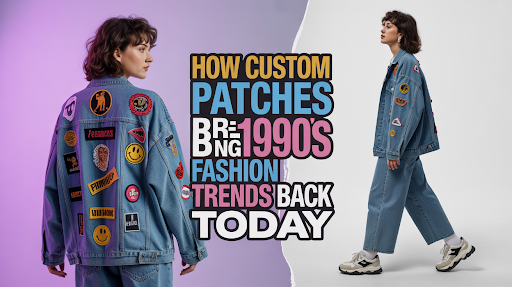
  • How Custom Patches Bring 1990s Fashion Trends Back Today

    How Custom Patches Bring 1990s Fashion Trends Back Today

    The 1990s didn’t care about subtle. Fashion back then was loud, layered, oversized, logo-heavy, and unapologetically expressive. From grunge kids stitching personality onto denim to hip-hop crews flexing identity through jackets and hats, the 90s treated clothing like a billboard for self-expression. And sitting right at the heart of that movement? Custom patches.

    Fast forward to today, and the UK fashion scene is deep in a 90s revival. Baggy fits are back. Bomber jackets are everywhere. Bucket hats refuse to retire. And custom patches have re-entered the chat, not as a trend, but as a power move for brands that know nostalgia sells when it’s done right.

    This isn’t about copying the past. It’s about re-engineering 90s fashion through modern custom patch making, smarter materials, and better production options. Let’s break down how custom patches shaped 1990s fashion and why they still matter now.

    Why Custom Patches Were a 90s Fashion Staple

    In the 90s, fashion was personal. People didn’t just buy clothes; they built them. Custom patches played a massive role because they were:

    • Affordable
    • Customisable
    • Easy to attach or remove
    • Perfect for storytelling

    Back then, patches weren’t about brand guidelines. They were about identity.

    Think:

    • Band patches stitched onto denim jackets
    • Biker patches layered on leather
    • School mascot patches on varsity wear
    • Club member’s patch worn like a badge of honour

    This DIY attitude made custom embroidered patches and sew on patches for clothes essential tools for style rebels.

    Denim Jackets, Bomber Jackets & Patch Culture

    If one garment defines 90s patch culture, it’s the denim jacket. Oversized denim jackets covered in custom patches became walking timelines of someone’s taste, bands, slogans, graphics, even protest symbols. Bomber jackets followed closely behind, especially in rave, punk, and hip-hop scenes.

    Today’s fashion brands are bringing that energy back, using:

    • custom logo patches for jackets
    • custom iron on patches for fast application
    • custom embroidered patches for hoodies
    • statement back patches with bold threadwork

    The difference? Brands can now design your own patch and order with precision instead of trial and error.

    The Rise of Woven Patches in 90s-Inspired Fashion

    While embroidered patches dominated early 90s style, woven patches quietly became the detail king, especially for logos, text-heavy designs, and cleaner visuals.

    Woven patches allowed:

    • Sharper edges
    • Fine details
    • Minimalist yet bold aesthetics

    That’s exactly why modern 90s-inspired brands in the UK are leaning heavily into woven styles again. If you want a deeper look at how this patch type fits into current fashion cycles, this guide on How Woven Patches Are Revolutionizing Fashion Trends in the UK fits perfectly into the conversation.

    It explains why woven patches are ideal for reviving 90s looks without making them feel dated.

    Hats, Bags & Accessories Got the Patch Treatment Too

    The 90s didn’t stop at jackets. Accessories were fair game.

    Custom patches popped up on:

    • snapback hats
    • backpacks
    • messenger bags
    • tote bags
    • even trainers

    Today, brands use custom logo patches for hats and custom logo patches for bags as low-cost, high-impact branding tools. One patch can turn a basic accessory into a recognisable product line.

    That’s why many UK labels now buy custom patches online to test designs before rolling out full collections.

    Music, Subcultures & Patch Identity

    The 1990s weren’t one fashion lane, they were a motorway of subcultures.

    Each group had its own patch language:

    • Grunge leaned raw and messy
    • Punk went aggressive and political
    • Hip-hop favoured bold logos and symbolism
    • Biker culture demanded hierarchy and placement rules

    Custom patches acted as visual shorthand. You didn’t need to explain yourself, your jacket did the talking. Modern brands targeting niche audiences still use this approach. Whether it’s custom patches for events, festivals, or underground fashion drops, patches help create instant belonging.

    Why 90s Patch Style Works for UK Brands Today

    UK fashion buyers love heritage with attitude. 90s fashion offers both and custom patches make it wearable.

    For brands, patches deliver:

    • Low production risk
    • Easy seasonal updates
    • Fast turnaround custom patches UK
    • Strong storytelling without redesigning garments

    That’s why many startups look for the best place to order custom patches instead of investing in complex embroidery directly on garments.

    Modern Production Meets 90s Attitude

    What’s changed since the 90s is quality and control.

    Today’s custom patch maker options in the UK allow:

    • No minimum orders
    • Better thread durability
    • Cleaner finishes
    • Multiple backing options

    So brands can recreate that 90s energy while delivering high quality embroidered patches made in UK, without the DIY mess.


    Patch Placement Rules the 90s Perfected and Brands Still Use

    If the 90s taught us one thing, it’s this: where you place a patch matters just as much as the patch itself.

    Back then, there were unspoken placement rules:

    • Back panels on denim jackets for statement patches
    • Chest or sleeve patches for identity or affiliation
    • Shoulder and arm placements for hierarchy and symbolism
    • Hats and bags for logo repetition

    Today’s fashion brands are borrowing these same principles. A single custom logo patch for jackets on the chest creates brand recall. A large back patch tells a story. Sleeve patches add texture without overwhelming the garment.

    When done right, placement turns custom patches for hoodies, bomber jackets, or denim into intentional design, not decoration.

    Unique Shapes Took 90s Fashion from Loud to Legendary

    Rectangles and circles were just the beginning in the 90s. As the decade progressed, patches broke out of predictable forms.

    Think:

    • Lightning bolts
    • Flames
    • Irregular graffiti outlines
    • Abstract symbols

    Those unconventional shapes made designs feel rebellious, which is exactly why they’re trending again. Modern brands in the UK are pushing nostalgia further with unique custom shaped patches that feel retro but refined.

    Best Patch Types for Recreating 90s Fashion

    Not all patches deliver the same 90s energy. Choosing the right type matters.

    Here’s how brands are matching patch styles with retro aesthetics:

    • Custom Embroidered Patches
      Ideal for classic denim jackets, bomber jackets, biker wear, and club member patches.
    • Custom Woven Patches
      Perfect for minimal logos, fine text, and cleaner 90s streetwear looks.
    • Custom Chenille Patches
      A varsity favourite straight from the 90s. Think school mascot patches and sports uniforms.
    • Custom Leather Patches
      Great for hats, bags, and premium streetwear with subtle branding.
    • Custom PVC Patches
      A modern twist for brands mixing 90s nostalgia with futuristic edge.

    Each patch type helps brands recreate a specific slice of 90s culture without feeling outdated.

    Backing Options That Actually Work for Retro Garments

    One common mistake brands make is choosing the wrong backing.

    Here’s what works best for 90s-inspired clothing:

    • Sew-on patches for clothes
      Authentic, durable, and perfect for denim and leather.
    • Custom iron on patches
      Ideal for hoodies, tees, and fast fashion drops.
    • Velcro patches
      Popular for military-inspired 90s looks and modular designs.

    Choosing the right backing ensures longevity, especially for garments meant to feel worn-in and lived-in, a key part of 90s appeal.

    Why 90s Patches Are a Smart Play for UK Brands

    From small labels to established retailers, UK fashion brands are turning to custom patches for small businesses because they offer:

    • Low minimum orders
    • Fast turnaround custom patches UK
    • Easy design updates without reworking garments
    • Strong brand storytelling

    For drops, festivals, and pop-ups, patches are often cheaper and faster than full embroidery, making them perfect for testing ideas.

    That’s why many designers search for a custom patch maker near me or the best patch maker in the UK when building 90s-inspired collections.

    FAQs

    How much do custom patches cost?

    Prices vary based on size, type, and quantity. Many UK suppliers offer cheap custom patches with no minimum, making them ideal for small runs.

    Are custom patches durable for daily wear?

    Yes. High quality embroidered patches made in UK are designed to withstand washing, friction, and regular use.

    What’s the fastest way to get patches made in the UK?

    Look for suppliers offering rush order custom patches UK and local production for quicker turnaround.

    Can I order patches online without design experience?

    Absolutely. Most platforms let you design your own patch and order with mockups and expert guidance.

    Are patches suitable for modern streetwear brands?

    100 percent. Patches bridge nostalgia and modern fashion better than almost any other embellishment.

    Why 90s Patches Still Win!

    The 90s weren’t polished, they were powerful. Custom patches captured that spirit then, and they’re doing it again now for a new generation of UK fashion brands.

    Whether you’re launching a streetwear label, refreshing a heritage line, or experimenting with nostalgic drops, custom patches offer flexibility, personality, and profit-friendly production.

    If you’re ready to bring that 90s energy into your collection, don’t overthink it. Get your custom patches designed, produced, and delivered from Patch Makers UK and let your garments do the talking.

  • How Custom Patches Adapt to Viral Trends and Online Fads?

    How Custom Patches Adapt to Viral Trends and Online Fads?

    Trends today don’t knock politely. They barge in via TikTok, remix themselves on Instagram, get memed on X, and vanish before you’ve even updated your brand deck. One minute it’s cottagecore, the next it’s gorpcore, quiet luxury, Y2K chaos, or pixel nostalgia. 

    In all this digital noise, custom patches have quietly pulled off something impressive, they’ve become a physical anchor for online culture. Something scroll-born, but stitch-stable. And that’s exactly why brands, creators, clubs, and even small UK businesses are leaning into them harder than ever. It’s all about nostalgia and  relevance.

    Digital Trends Move Fast. Custom Patches Keep Up.

    Digital culture runs on speed, scarcity, and identity. If your brand can’t adapt quickly, it’s yesterday’s news. Custom patches tick all three boxes:

    • Fast to design

    • Easy to launch in small batches

    • Flexible enough to mirror micro-trends

    From meme-inspired iconography to minimalist symbols that feel straight out of a design subreddit, patches translate digital aesthetics into wearable statements. A hoodie graphic might age out in months, but a patch feels collectible. Intentional. Designed, not dumped.

    That’s why you’re seeing custom embroidered patches, custom PVC patches, and even custom woven patches popping up everywhere from streetwear drops to niche community merch.

    Social Media Has Turned Patches into Signals

    In today’s digital-first culture, everything you wear says something, especially if it looks limited or custom. Patches work because they act like visual shorthand.

    A single patch can signal:

    • A fandom

    • A movement

    • A subculture

    • A brand value

    • An inside joke

    On social platforms, that kind of symbolism travels fast. One clean patch on a jacket sleeve or tote bag can outperform a full graphic tee in engagement. Why? Because it invites curiosity.

    People ask, “Where did you get that?” That question is marketing gold.

    It’s no surprise that custom patches for UK brands, creators, and events are increasingly designed with social sharing in mind, bold shapes, tight colour palettes, and camera-friendly contrast.

    Micro-Communities Are Fueling Patch Culture

    Digital trends aren’t mass anymore. They’re fragmented into micro-communities, Discord servers, niche forums, local collectives, hobby groups, and pop-up scenes. And patches thrive here.

    Why? Because patches are:

    • Affordable to produce in small quantities

    • Easy to personalise

    • Ideal for club membership or insider status

    This is where club member patches, custom patches for events, and even limited-run custom patches with no minimum really shine. You don’t need a massive production run to feel legit.

    In the UK especially, this has led to offline moments powered by online hype. One standout example is the rise of community-driven patch swaps and meetups, like those explored in Patch Trading Nights: A UK Trend Powered by Custom Patches. These events turn digital fandom into face-to-face culture and patches are the currency.

    Trend Cycles Love Physical Proof

    Digital fads come and go, but people love souvenirs of moments they were part of. That’s where patches outperform most merch.

    Think about it:

    • A story disappears in 24 hours

    • A reel gets buried

    • A patch stays stitched

    Whether it’s a festival run, a seasonal drop, or a viral campaign, patches act as proof of participation. That’s why custom patches for festivals, custom patches for small businesses, and promotional patches for brand marketing are increasingly built into launch strategies. They don’t replace digital, they complete it.

    Customisation Is the New Currency

    Modern consumers don’t want mass-produced. They want theirs. Digital culture has trained people to personalise everything, feeds, playlists, avatars, even algorithms.

    Custom patches slot perfectly into this mindset. From design your own patch and order tools to rapid sampling, brands can now respond to trends in real time. Want to test a new visual language? Launch a patch. Want to experiment with humour or irony without rebranding your whole line? Patch it.

    That flexibility is why so many creators choose patches over permanent prints, especially when riding fast-moving trends.

    UK Brands Are Using Patches as Trend Testers

    In the UK market, patches have become a low-risk way to experiment. Streetwear brands, corporate teams, clubs, and even workwear suppliers use patches to test:

    • New logos

    • Alternate brand tones

    • Seasonal graphics

    • Community-focused messaging

    If it works, scale it. If it doesn’t, move on. That’s far harder (and more expensive) with full garment runs. Add in options like custom iron on patches, sew on patches for clothes, and custom patches Velcro, and brands can adapt designs without changing the base product at all.

    Various patches on a denim jacket.


    Where Digital Fads and Physical Craft Meet

    There’s something powerful about taking a digital idea and making it tactile. In a world obsessed with screens, patches bring texture back into branding. Stitch, thread, rubber, leather, they all add depth that pixels can’t.

    This blend of modern trends and old-school craftsmanship is exactly why high quality embroidered patches made in UK continue to hold value even as trends evolve.

    And we’re only halfway through the story.

    Unique Patch Shapes Are Winning the Algorithm Game

    Scroll through any trending fashion reel and you’ll notice something interesting, the designs that stop thumbs aren’t always louder. They’re smarter. In patch design, shape is now just as important as artwork.

    Forget basic circles and rectangles. Brands leaning into:

    • Asymmetrical silhouettes

    • Die-cut logos

    • Abstract outlines

    • Badge-inspired geometry

    are seeing higher engagement both online and offline. Why? Because unusual shapes read as intentional. They signal effort, creativity, and exclusivity, all values digital audiences love.

    This is exactly why unique custom shaped patches have become a staple for brands trying to stand out without shouting. When your patch shape is memorable, it becomes recognisable even in a blurred scroll, something covered in depth in Unique Custom Shaped Patches for Any Purpose in the UK, where form is treated as branding, not decoration.

    Speed Matters More Than Perfection

    In trend culture, timing beats polish. A clever idea launched late is still late. That’s where fast turnaround custom patches UK suppliers come into play. Brands that succeed in trend-driven spaces don’t overthink, they prototype, release, observe, then iterate.

    Patches allow you to:

    • Launch limited drops tied to viral moments

    • Respond to seasonal trends without long lead times

    • Test ideas without committing to full collections

    And because you can buy custom patches online with short production windows, you’re not stuck waiting months while the internet moves on.

    Backings Are a Hidden Trend Weapon

    Backing choices might sound technical, but in the digital age, convenience drives adoption. Trends thrive when they’re easy to participate in.

    That’s why:

    • Custom iron on patches dominate casual fashion and creator merch

    • Velcro patches win in tactical, club, and modular styles

    • Sew on patches for clothes remain a favourite for durability-focused audiences

    Each backing choice affects how often your patch gets worn, photographed, and shared. And in a trend-driven market, visibility equals relevance.

    FAQs

    Are custom patches still relevant in digital-first branding?

    More than ever. They bridge online culture with physical identity, giving trends something tangible.

    How quickly can custom patches be produced in the UK?

    With the right partner, rush order custom patches UK can be turned around in weeks, not months.

    Do patches work for non-fashion brands?

    Absolutely. From tech startups to community groups, patches function as branding, not just style.

    Which patch types suit modern digital aesthetics?

    Custom embroidered patches, PVC patches, and woven patches are the most adaptable for trend-led design.

    Are patches cost-effective for trend testing?

    Yes. They’re one of the lowest-risk ways to experiment with new visuals and messaging.

    Why Patches Will Keep Winning as Trends Change!

    Digital trends will keep shifting, platforms evolve, aesthetics rotate, and attention spans shrink. But custom patches endure because they do something rare: they slow the moment down.

  • Custom Monochrome Patches for Fashion Workwear and Branding

    Custom Monochrome Patches for Fashion Workwear and Branding

    Trends come and go. Loud designs shout for attention, then quietly disappear. But monochrome? Monochrome stays. In a world drowning in colour, custom monochrome patches are the sharp black coffee of branding, bold, confident, and unapologetically grown-up.

    UK fashion brands, clubs, businesses, and creators are leaning hard into minimalism, and monochrome patches sit right at the heart of that movement. No distractions. No colour chaos. Just strong design, crisp stitching, and a look that feels intentional rather than accidental.

    If your brand values clarity, authority, and timeless appeal, you’re already halfway there.

    What Exactly Are Custom Monochrome Patches?

    Custom monochrome patches are patches designed using a single colour palette, typically black, white, grey, or tonal variations of one shade. Instead of relying on multiple colours, the design focuses on:

    • Clean lines
    • Texture and depth
    • Stitch direction and density
    • Contrast between fabric and thread

    Whether you’re ordering custom embroidered patches, woven styles, or PVC options, monochrome designs force the craftsmanship to do the talking. And when craftsmanship is good, silence becomes powerful.

    Why Monochrome Patches Are Dominating UK Branding

    UK brands have always had a soft spot for understatement. Think Savile Row suits, minimal streetwear, or heritage workwear labels. Monochrome fits neatly into that mindset. Here’s why custom monochrome patches are becoming a go-to choice:

    1. They Look Premium Without Trying Too Hard

    Colour-heavy patches can feel busy. Monochrome designs look refined, intentional, and premium, especially on jackets, hats, bags, and hoodies. That’s why many brands choosing high quality embroidered patches made in UK lean toward black-on-black, white-on-black, or tonal greys.

    2. They Work Across Every Product

    From custom logo patches for hats to custom logo patches for jackets and bags, monochrome patches adapt effortlessly. They don’t clash with fabrics, seasonal colours, or outfit styles. One patch design. Multiple products. Zero headaches.

    3. They Age Better Than Colour-Heavy Designs

    Trends fade. Minimalism doesn’t. Monochrome patches maintain their relevance whether they’re used for custom patches for small businesses, club member patches, or promotional patches for brand marketing.

    Where Custom Monochrome Patches Work Best

    Monochrome patches are a fashion and thrive wherever clarity and identity matter.

    Fashion & Streetwear

    Minimal hoodies, bomber jackets, caps, and denim look sharper with custom monochrome patches. Especially when paired with:

    • Sew on patches for clothes
    • Custom iron on patches
    • Custom embroidered patches for hoodies

    Corporate & Workwear

    Many companies choose monochrome designs for corporate logo patches UK made and custom employee name patches for workwear. They look professional, uniform, and authoritative.

    Clubs, Teams & Communities

    Biker clubs, scouts, sports teams, and social groups often prefer monochrome for a sense of unity. Custom biker patches for jackets and custom team patches for sports uniforms benefit hugely from simple, bold contrast.

    Monochrome Does Not Mean Boring

    Here’s the myth that needs binning: monochrome is dull. In reality, monochrome patches allow you to play with:

    • Stitch height
    • Border thickness
    • Thread finishes
    • Fabric textures

    The result? Depth without clutter.

    Choosing the right patch size, border, backing, and stitching style becomes crucial here, which is why understanding those elements properly makes all the difference. If you’re planning to design your own patch and order it with confidence, this detailed breakdown is worth a look: UK#1 Guide to Custom Patch Sizes, Types, Colours, Borders & Backings! That knowledge turns “simple” into “strategic”.

    Popular Styles for Custom Monochrome Patches

    Different patch styles handle monochrome designs differently. Choosing the right one is half the win.

    Custom Embroidered Patches

    The most popular option for monochrome designs. Stitch density and direction create depth even with one colour. Ideal for logos, emblems, and text-heavy designs.

    Custom Woven Patches

    Perfect for fine detail and typography. Woven monochrome patches look sharp and modern, especially for minimalist branding.

    Custom PVC Patches

    For outdoor gear, uniforms, or rugged use. Monochrome PVC designs look bold and structured while staying weather-resistant.

    Custom Leather Patches

    A favourite for premium fashion and accessories. Debossed or embossed monochrome leather patches scream craftsmanship.

    Custom Shapes and Layouts That Make Monochrome Designs Pop

    When colour steps aside, shape steps forward. In monochrome patch design, shape is the hero. Brands across the UK are ditching basic circles and rectangles in favour of shapes that feel intentional and distinctive. Why? Because minimal designs need structure to stand out.

    Shapes That Work Exceptionally Well in Monochrome

    • Shield and crest shapes for heritage brands and clubs
    • Geometric cuts for fashion labels and streetwear
    • Slim horizontal patches for caps, bags, and tactical wear
    • Custom silhouettes for logos that deserve their own outline

    Sharp edges, clean curves, and bold borders enhance contrast without adding colour. If you want to explore how unconventional shapes transform minimal designs, this guide explains it brilliantly: Unique Custom Shaped Patches for Any Purpose in the UK!

    Backing Options That Work Best for Monochrome Patches

    The wrong backing can undo even the cleanest design. Monochrome patches need backings that support precision and durability, not shortcuts.

    Best Backing Choices Explained

    Sew-On Backing

    The most reliable option for fashion, denim, and workwear. Ideal for:

    • Custom patches for hoodies
    • Custom embroidered patches for jackets
    • Club member’s patch applications

    Iron-On Backing

    Perfect for quick application and retail-ready products. Works well for:

    • Custom clothing patches
    • Promotional campaigns

    Velcro Backing

    Common in tactical, military, and sports use. Best for:

    • Custom military patches UK
    • Custom team patches for sports uniforms
    • Patches that need frequent removal

    Adhesive Backing

    Great for short-term use like events and festivals, but not a long-term solution.

    Choosing the right backing helps ensure your custom monochrome patches look good today, and still look sharp months down the line.

    Why Monochrome Patches Last Longer Than Colour-Heavy Designs

    Durability is where monochrome quietly wins. With fewer threads, dyes, and colour blends involved, monochrome patches are:

    • Less prone to fading
    • Easier to stitch densely
    • More resistant to wear and washing

    This makes them ideal for custom patches made in United Kingdom for workwear, outdoor gear, and everyday apparel. Many brands looking for fast turnaround custom patches UK also prefer monochrome because production is cleaner and more consistent.

    How to Order Monochrome Patches Without Costly Mistakes

    Minimal designs leave no room for error. One misstep and the patch looks flat instead of premium. Here’s how to get it right the first time:

    1. Prioritise Contrast

    Black-on-black works beautifully but only with proper stitch height and texture. Always test visibility on your chosen fabric.

    2. Don’t Overcomplicate the Design

    Monochrome thrives on simplicity. Avoid tiny text or ultra-thin lines unless you’re using woven patches.

    3. Choose the Right Patch Style

    Not all designs suit all patch types. A custom embroidered patch may outperform PVC or printed styles for fine detail.

    4. Ask for Samples

    Especially for bulk orders. Sampling avoids surprises and ensures your patch aligns with your brand identity.

    5. Work With a Specialist

    If you’re searching for the best place to order custom patches or a custom patch maker near me, choose someone who understands minimal branding, not just mass production and that is where obviously Patch Makers UK stand out.

    FAQs

    How much do custom monochrome patches cost?

    Pricing depends on size, quantity, backing type, and patch style. Monochrome designs are often more cost-effective than multi-colour patches, especially for bulk orders.

    Are monochrome patches durable?

    Yes. With fewer colour threads involved, they’re less prone to fading and wear. They’re ideal for daily-use garments and uniforms.

    Can I order custom monochrome patches with no minimum?

    Many UK patch companies offer custom patches no minimum, making monochrome a smart option for startups and small brands.

    What’s the fastest turnaround time in the UK?

    Rush order custom patches UK can often be produced within days, especially for simple monochrome designs.

    Are monochrome patches suitable for fashion brands?

    Absolutely. They’re a favourite for streetwear, luxury labels, and minimalist collections due to their timeless appeal.

    Less Colour But More Character!

    British consumers appreciate subtlety. Monochrome patches align with that mindset, they feel considered, refined, and intentional. They don’t scream branding. They whisper confidence.

    Custom monochrome patches prove that great design doesn’t need noise. With the right shape, backing, and execution, a single colour can deliver more impact than a rainbow ever could.

    If you’re ready to design your custom patch, order high quality monochrome patches, and boom your brand without overcomplicating it, then now’s the moment to get your custom patches made, clean, bold, and built to last. Keep it simple. Keep it sharp. Let monochrome patches from Patch Makers UK do the heavy lifting.